10 year product warrantyOn inverter and batteries, according to the applicable warranty conditions

Zendure custom home batteries
A home battery that matches your consumption.
Installed by our own team.
We look at when you use electricity and how much solar power remains. For this we use measurements from your digital meter per quarter of an hour. We choose a suitable structure with the Zendure 2400 AC+, 4000 Mix AC+ or Mix Pro.
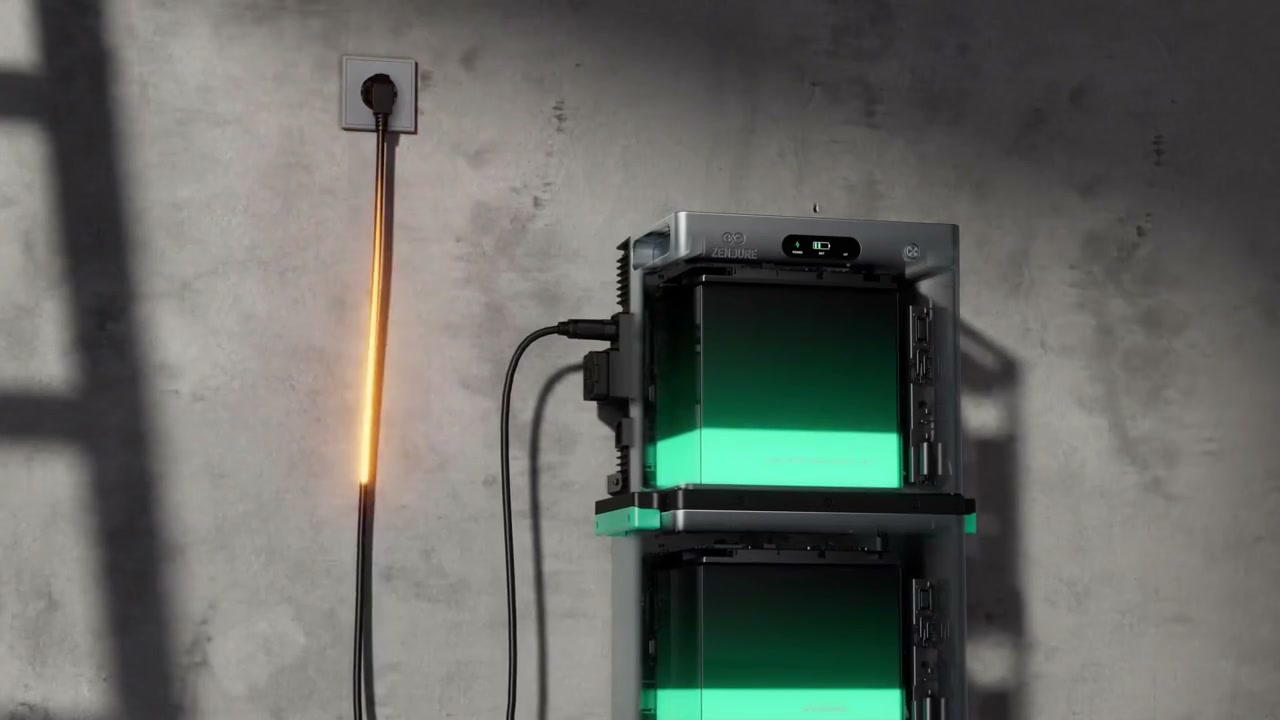
Made to measureBased on consumption, solar production and heavy equipment
Appropriate structureIndividual modules or complete devices, according to your needs
Placed by usPreparation, installation and support by us
First check when you use electricity
A home battery is only useful if you also use the stored power.
A home battery stores power for a later time. It usually stores excess solar power from the day for use in the evening or at night. Depending on your contract and settings, it can also respond to price differences or limit short consumption peaks. What makes sense varies per home.
That is why we look beyond the number of solar panels. The measurements per quarter of an hour, also called quarter-hour values, show when you put power on the grid, how much you use later and how often that pattern occurs. We also take into account a heat pump, electric cooking, a charging station and other major consumers. It is not only the storage in kWh that counts: the power in kW determines how much power the battery can supply at the same time.
Laadnatie works with Zendure SolarFlow systems. The 2400 AC+ suits smaller and modular setups. The 4000 Mix AC+ combines approximately 8 kWh storage with 4 kW power; the Mix Pro adds inputs for directly connected solar panels. We explain why a model and number of devices suit your situation, install them ourselves and remain accessible afterwards.
Capacity, power and price
What capacity and power do you need?
A good choice combines your measurement data with the technical possibilities of your home. We look at these factors together before making the final quote.
Your consumption per quarter of an hour
The measurements of your digital meter show when you use electricity from the grid and when you put electricity on the grid. This way we see how much you can save for later. Your annual consumption alone does not tell you that.
Solar panels
Power, orientation and production determine when power remains. We do not choose the battery solely based on the theoretical peak power of the panels.
Day and evening consumption
You should also be able to use the stored power later. That is why we look at when you are at home, which appliances are working at the same time and how your consumption changes throughout the year.
Heavy consumers
Heat pump, induction hob, boiler and charging station determine how much power can be needed at the same time. We choose both how much power the battery can store and how much it can supply at the same time.
Control and rate
Do you mainly want to use more solar power, charge when electricity is cheap or limit consumption peaks? We adjust the settings accordingly and ensure that different apps do not contradict each other.
Location and installation
Available space, the mounting surface, cable route, distribution board, ventilation and electrical protection determine the practical installation and price.
From measurement data to installation
This is how we choose and install your home battery.
From your measurement data to a suitable battery, with an explanation of the choices and expected yield.
- 01
Mapping consumption
You share your annual consumption and preferably also the measurements of your digital meter per quarter-hour. We discuss your solar panels, energy contract, charging station and devices that use a lot of power.
- 02
Choosing capacity and power
We compare how much energy can be stored daily with what you use later. We then choose the model, the number of complete devices and any suitable battery modules.
- 03
Prepare technology
We check the fuse box, cable route, installation location and the connection to existing solar panels and energy measurement via photos, a video call or a site visit.
- 04
Install and follow up
We install and secure the entire installation, set up the energy management and show how to monitor production, storage and consumption. Questions afterwards will be sent directly to us.
Take a sober look at returns
When does a battery become interesting?
The best starting situation is usually a recurring power surplus that you can use yourself a few hours later. If you put a lot of power on the grid during the day and use it again in the evening, a battery can increase your self-consumption. If you use most of the solar power immediately, there will be less left to store. A battery does not produce free energy and always loses some power during charging and discharging.
Prices and rules also change. A calculation that only works with one exceptionally expensive rate or a perfect daily charging cycle is too uncertain. We look at several typical days and show which assumptions influence the result. This way you know whether storage makes sense today, which capacity is appropriate and whether another measure will yield more first.
- More important than the number of panels is how much electricity you regularly export to the grid and draw back later.
- A larger battery only makes sense if you can charge and discharge it often enough.
- Look at different seasons; one sunny summer day tells you little about a full year.
- A fixed payback period without measurement data is not reliable advice.
One energy system
Home battery, charging station and solar panels are coordinated.
An electric car has a much larger battery than an average home battery. If the car charges from the home battery without clear priorities, the stored energy will be used up quickly. Charging directly with excess solar power is often more efficient than first storing that power at home. At other times you want to keep a reserve for evening consumption.
We therefore discuss which power goes first to the home, car or battery, which power limit protects the connection and which app or control provides central control. Clear priorities prevent charging station, battery and dynamic rate from each trying to enforce a different schedule.
Installer in Flanders and Brussels
We install home batteries throughout Flanders and Brussels.
A lot of preparation can be done with quarter-hour values, clear photos and a video call. If the cabinet, cable route or mounting location requires more research, we will determine together whether a site visit is necessary.
In Brussels we also look at the notification to Sibelga and the consequences for any green energy certificates for your solar panels. A home battery must be reported there within 30 days after being put into use. We do not apply the Flemish calculation of the capacity tariff to a Brussels connection.
We are also looking at projects in Wallonia. There we prepare the installation via photos or a video call.
Discuss your site with us8490 Jabbeke
2800 Mechelen
Honest about energy storage
Frequently asked questions about home battery installation.
When is a home battery interesting?
A home battery can be interesting if you regularly put solar power on the grid during the day and purchase power again later. A dynamic rate, charging station or other controllable devices can change the result. That is why we look at your 15-minute readings, production, consumption and daily rhythm. The number of solar panels alone does not say enough: two families with the same installation may need a completely different battery.
Read the complete guide to profitabilityHow big should my home battery be?
The correct capacity depends on the energy that you can store on a normal day and use later. We also look at the power you need at the same time. The 2400 AC+ grows with AB3000L modules; With the 4000 Mix we currently calculate with complete appliances of approximately 8 kWh. For example, we compare a structure that you can charge and unload often enough.
Read how capacity and power differWhat is the payback period for a home battery?
There is no fixed payback period that is right for every family. The result depends on your consumption, the electricity you put on the grid, your energy contract, grid rates, purchase price, control and how often you use the battery. That's why we don't promise a standard number of years. We show which data determines the calculation and choose a capacity that you can really use.
See what determines the payback periodCan a home battery work with my charging station and solar panels?
With appropriate measurement and control we can coordinate the energy flows. A car requires a lot of energy and can quickly discharge a home battery. We therefore look at charging times, available solar power and the desired reserve for the home. A larger battery or a new model does not in itself prove an automatic smart connection to every charging station.
Read how battery and charging station influence each otherCan I store solar power from summer to winter?
No. A home battery mainly shifts energy within the same day or over a short period of time. She cannot store a large summer surplus for months until winter. During dark winter weeks there is also little solar power to store. That is why we look at 15-minute readings in different seasons, not just at the highest production on a sunny day.
Read why 15-minute readings and seasons countDoes storage match your consumption?
Calculate your price estimate or let us review your consumption.
The simulator provides an initial price estimate. We will then check your measurement data and technical situation and make the final quotation.